

Table of Contents
- What 4A Hair Actually Is (And How to Tell If You Have It)
- Wash and Go Routine for 4A Hair, Step by Step
- Best Products for 4A Curl Definition
- Why Your 4A Curls Are Not Clumping (And How to Fix It)
- How to Refresh 4A Curls Between Wash Days
- How to Maintain 4A Curls Overnight
- Mixed Patterns and the Limits of Curl Typing
- Conclusion
- Frequently Asked Questions
Last Updated: October 13, 2026
What 4A Hair Actually Is (And How to Tell If You Have It)
To define 4a hair, know that it is a type 4 curl pattern made of springy, S-shaped ringlets about the width of a chopstick or a coffee stirrer. It is the loosest of the three type 4 textures.
Learning how to define 4a hair curls starts with knowing your pattern.
The good news: 4A hair holds definition better than tighter type 4 textures. The ringlets already exist, support them, don't force them.
The Self-Identification Test: Wet, Stretch, and Watch
The most reliable way to identify 4A hair is a wet stretch test, five minutes, no special tools.
Try this:
- Wash a small section and leave it soaking wet.
- Coat the strand with conditioner so it clumps.
- Look for a clear S shape, roughly the width of a pen spring.
- Pull one curl gently downward, then let go.
- Watch how fast it snaps back.
Springy, quick recoil with a visible S pattern points to 4A; a coil tighter than a pen spring suggests 4B or 4C. Check three or four spots, most people are not a single pattern from root to tip.
Where 4A Sits Next to 3C, 4B, and 4C
Curl typing runs on a scale, and the neighbors matter more than the label.
- 3C hair: tight corkscrews, about the width of a pencil, with a clear curl pattern and more natural shine.
- 4A hair: S-shaped ringlets, pen-spring width, dense and springy with a cotton-like feel.
- 4B hair: sharper Z-shaped bends, less visible curl definition, more shrinkage.
The practical difference shows up on wash day. A 3C wash-and-go often needs one product. A 4A wash-and-go usually needs a leave-in plus a gel to hold the clumps together.
Wash and Go Routine for 4A Hair, Step by Step
A wash and go works for 4A hair because the pattern already clumps on its own. The routine is simple, but order matters more than products.
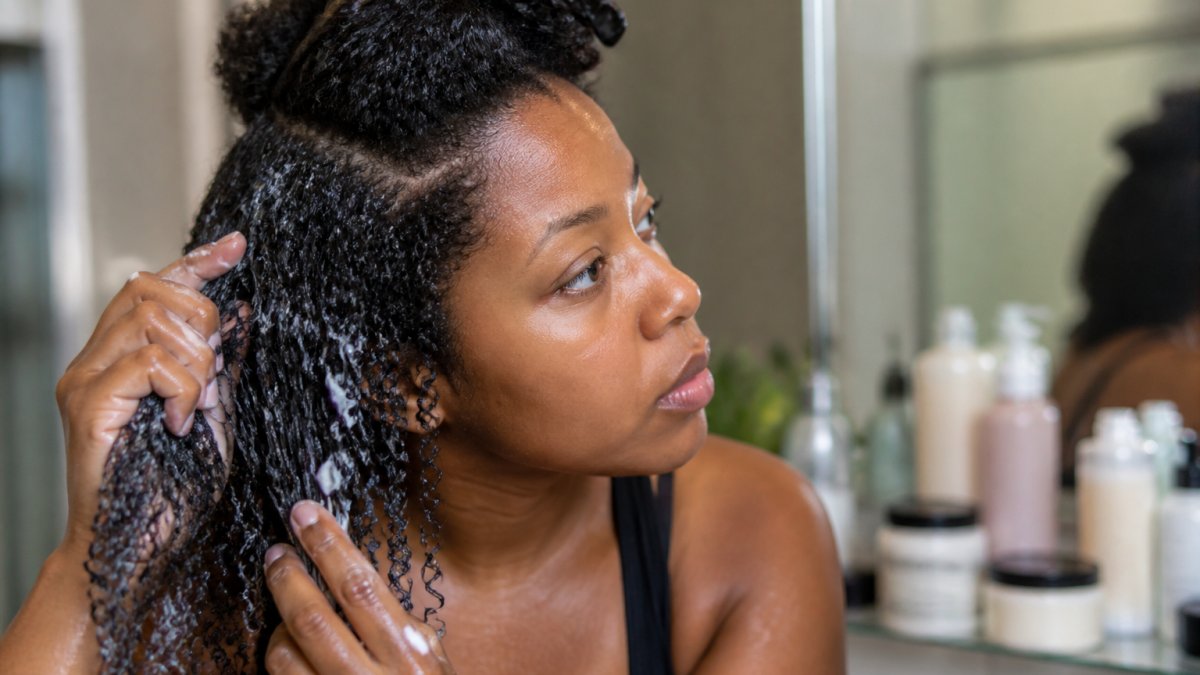
Step 1: Cleanse and Condition Without Stripping
Start with a sulfate-free cleanser, harsh lather strips the oils 4A hair needs. Follow with a rich conditioner, detangle with your fingers or a wide-tooth comb while it sits, and rinse cool to seal the cuticle.
Step 2: Apply Product to Soaking Wet Hair
This is the step most people rush. Apply leave-in and curl cream to dripping wet hair in small sections, rake through, then smooth root to tip, a slight squish means the hair is absorbing moisture.
Step 3: Dry Without Breaking the Cast
Air dry, or diffuse on low heat and low speed, without touching your curls. Once dry, break the gel's crunchy cast by scrunching with dry hands or a little oil, the defined curls underneath are the payoff.
Best Products for 4A Curl Definition
The best products for 4A curl definition do three jobs: add water, hold the clump, and seal it in. Which product does that depends less on the "4A" label than on porosity and strand thickness, two people with identical 4A ringlets can need opposite routines.
Match the product to your porosity, not just your curl type
Porosity describes how easily your cuticle lets water in and out, the biggest predictor of which products will work.
- Low porosity: the cuticle lies tight and flat, so water beads up and products sit on top. Look for lightweight, water-based leave-ins and humectants like glycerin or honey. Avoid heavy butters and oils as a first layer, they seal the cuticle before water gets in.
- High porosity: the cuticle is raised and porous. Hair drinks water fast but loses it just as fast. Layer a water-based leave-in, then a cream, then a sealing oil or butter. Protein treatments can temporarily fill gaps in the cuticle, but use them sparingly, too much makes high-porosity hair stiff and brittle.
- Medium porosity: the middle ground. Most standard 4A routines work without much adjustment.
A quick at-home porosity check: drop a clean shed strand into room-temperature water. Floating for several minutes suggests low porosity; sinking within a minute or two suggests high porosity.
Match the product to your strand thickness
Strand thickness (fine, medium, or coarse) is separate from density (how many strands you have). Fine 4A hair is easily weighed down, so a lightweight cream plus soft-hold gel beats a heavy butter. Coarse 4A hair carries richer creams and butters without collapsing.
The four product categories, and what each one actually does
- Leave-in conditioner: the water and hydration layer. Water-based, absorbs fast, goes on first. Look for glycerin, aloe, or panthenol near the top of the ingredient list.
- Curl cream: the clumping and moisture layer. Provides slip and helps ringlets form. Light oil bases (jojoba, grapeseed) suit fine hair; shea or cocoa butter suit coarse hair.
- Styling gel: the hold layer. Film-formers like PVP, VP/VA copolymer, or flaxseed create the cast that locks the clump in place. Hard-hold gives longer-lasting definition; soft-hold gives more movement.
A common mistake is buying a heavy butter for a wash-and-go. Butters excel in twist-outs and protective styles, but on fine or low-porosity 4A hair they sit on the surface and flatten the pattern. On coarse, high-porosity 4A hair, a butter can be exactly right.
How to test a product before committing to a full wash day
Buying a full-size product that fails is expensive. Instead, apply it to one small, freshly washed section, let it dry, and check three things: did the ringlet clump, did it hold shape, and did it feel soft or crunchy?
If you are not sure where to start, Hair Naturally Beauty Supply offers a curated selection of products for 4A, 4B, or 4C hair types, leave-ins, curl creams, gels, and styling tools in one place.
Why Your 4A Curls Are Not Clumping (And How to Fix It)
Curls fail to clump for four common reasons, and each one has a fix.
- Hair is too dry when you apply product. Fix: apply everything to soaking wet hair, not damp hair.
- You are using too much heavy product. Fix: switch a butter for a cream or a light gel.
- You are raking, then scrunching, then raking again. Fix: pick one method and finish it. Repeated handling splits the clumps.
Product buildup is another culprit: if hair feels coated or waxy, clarify once before your next wash day. Self-check: squeeze a wet section gently, if hairs separate instead of staying together, your product is too thin or your hair needs more water.
How to Refresh 4A Curls Between Wash Days
To refresh 4A curls, spritz with water until damp, not soaked, then reapply a small amount of leave-in and smooth each section back into shape.
Here is a simple refresh routine:
- Fill a spray bottle with water and a splash of leave-in conditioner.
- Mist one section at a time.
- Smooth the strand with your palm, root to tip.
- Scrunch gently and let it air dry.
This takes about ten minutes and adds two or three days between wash days. For tighter sections that lost shape, add a dab of gel to the ends only, too much product near the scalp flattens volume.
How to Maintain 4A Curls Overnight
To maintain 4A curls overnight, protect the clumps from friction while you sleep, cotton pillowcases pull moisture out and rough up the cuticle.
Try one of these methods:
- Pineapple: gather hair into a loose, high ponytail with a satin scrunchie.
- Medusa clipping: section hair and clip each piece loosely on top of your head.
- Satin bonnet or scarf: cover the whole head to lock in moisture.
In the morning, remove the clips or scrunchie and shake gently, most sections bounce right back, and a little water on the ends revives anything flattened.
American Academy of Dermatology hair care guidance
Mixed Patterns and the Limits of Curl Typing
The curl typing system is a starting point, not a diagnosis. Most people have mixed patterns across their head, and the type label alone says little about how your hair will behave with a given product.
How to identify your natural pattern without styling interference
Most people misidentify their curl type because they judge it from styled hair. Gel, cream, and stretching techniques all change how a curl looks.
Try this method:
- Wash with a clarifying shampoo to remove all product buildup, which can temporarily loosen or tighten a curl's appearance.
- Apply a light, water-based conditioner and rinse completely. Do not add leave-in, cream, or gel.
- Let your hair air dry with no manipulation. Do not touch, scrunch, or diffuse.
- Once fully dry, examine at least four sections: the nape, the crown, the temples, and one side.
- For each, note the shape (S curve vs. Z bend), the coil width (compare to a pen spring, chopstick, or coffee stirrer), and how much the hair shrank from its wet length.
Look for the pattern hair falls into on its own, not one you force with product.
A common mistake is judging from a single curl, it may have been stretched by a ponytail, flattened by a bonnet, or loosened by leftover product.
Why one head can have three curl patterns
Curl pattern is determined by follicle shape and how the strand emerges from the scalp. Follicles are not uniform across the head, so neither is the curl, 3C at the nape, 4A through the crown, and 4B at the temples is completely normal.
Here is how to handle a mixed head:
- Apply lighter products to the looser sections.
- Use richer products on the tighter sections.
- Style each zone separately instead of treating the whole head the same.
What curl typing does not tell you
The system describes curl size and shape. It says nothing about:
- Strand thickness: fine, medium, or coarse. Determines how much product the hair can carry before it collapses.
- Density: how many strands per square inch. Determines volume and layering.
- Porosity: how the cuticle absorbs and retains moisture. The biggest factor in product performance.
Two people can both have 4A hair and need completely different routines: one fine and low-porosity, thriving on lightweight water-based products; the other coarse and high-porosity, needing rich creams and sealing butters.
The U.S. Food and Drug Administration guidance on cosmetic products is a useful reference if you want to understand what is actually in the products you buy.
Conclusion
Getting definition on 4A hair comes down to three habits: apply product to soaking wet hair, protect the clumps while they dry, and keep your hands off until the cast sets. The pattern is already there.
If you are tired of guessing which products will work, Hair Naturally Beauty Supply carries a curated selection built for 4A, 4B, and 4C textures. As a Black-owned business, we stock leave-ins, curl creams, gels, braiding hair, wigs, and styling tools, all shipped fast.
Frequently Asked Questions
How do you define 4A hair curls without making them crunchy?
The crunch comes from the gel cast, not the gel itself. Apply your styling gel to soaking wet hair so it spreads evenly, then let the hair dry completely without touching it. Once dry, scrunch each section gently in your palms to break the cast. The hold stays, the crunch does not. If hair still feels stiff, you used too much product for your density; start with a smaller amount next wash day and layer a leave-in conditioner underneath.
Should you style 4A hair wet or damp for better curl definition?
Soaking wet, not damp. 4A hair clumps best when there is enough water in the strand for the S-shaped ringlets to find each other. Damp hair lets sections dry before they merge, which creates frizz and separates curls. Work in small sections, keep a spray bottle nearby to re-wet as you go, and apply leave-in conditioner and curl cream before the hair starts to dry. If your hair shrinks quickly, that is a sign it needs more water, not more product.
Why are my 4A curls not clumping?
Three causes cover most cases: hair that was too dry when product went in, product applied with a raking motion that broke the clumps apart, or buildup from heavy butters and oils blocking the strand. Clarify once a month, style on soaking wet hair, and switch from raking to praying hands and gentle scrunching. If your hair has mixed patterns, some sections will clump tighter than others, which is normal and not a sign that your routine is failing.
How do you keep 4A curls defined overnight?
Pineapple the hair into a loose, high ponytail with a satin scrunchie, or sleep in a satin bonnet or on a satin pillowcase. Cotton pillowcases pull moisture out of coily hair and flatten the curl pattern by morning. If your hair is short, try medusa clipping: section the hair and pin each section loosely to the scalp with small clips. In the morning, shake the roots, smooth any flattened spots with a little leave-in conditioner, and avoid re-wetting the whole head.